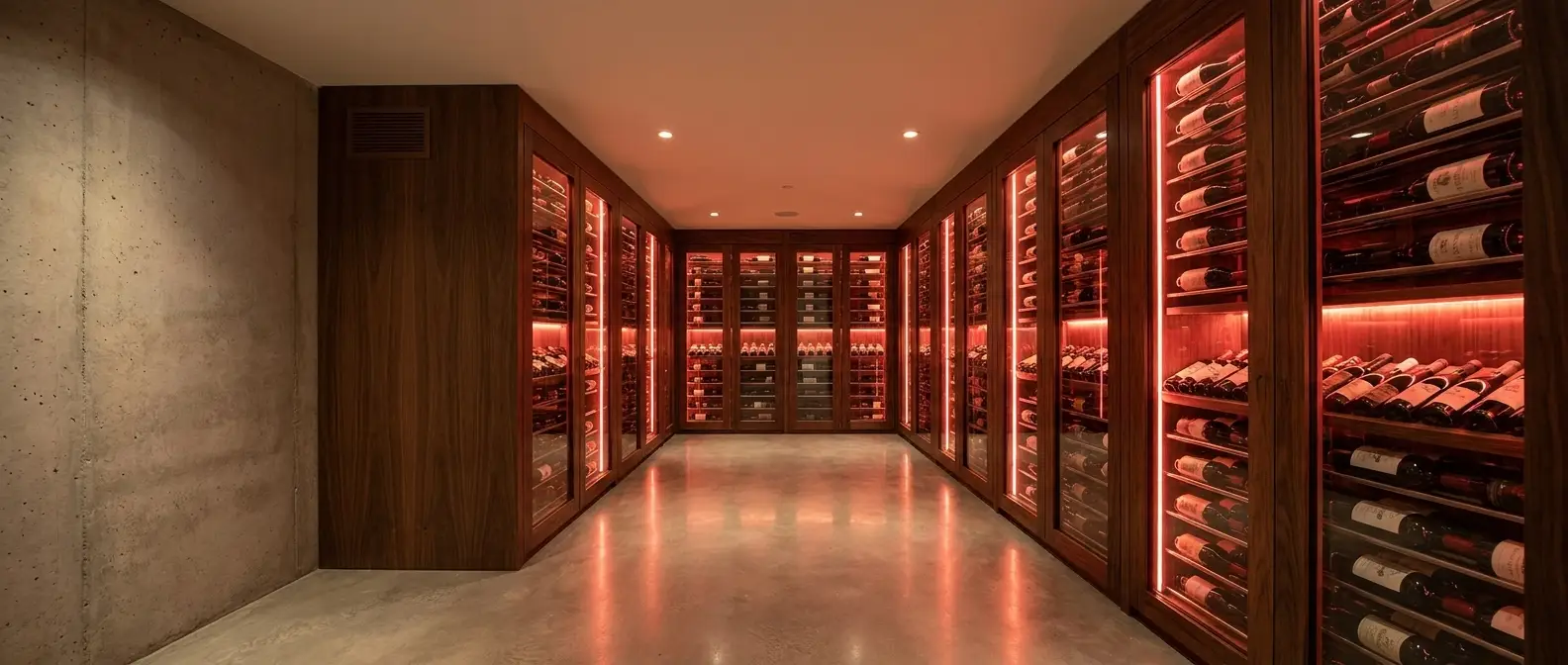
Wine Storage Guide
Wine cellar
temperature guide
The right wine cellar temperature is 55°F for long-term storage, but the real goal is stability. This guide explains the setpoint, the serving-temperature distinction, humidity, fluctuation causes, and how a proper cooling system holds the room steady.
Storage target
One steady cellar setpoint protects mixed collections better than chasing serving temperature inside the storage room.
Storage setpoint
55°F
13°C for mixed cellars
Humidity band
50-70%
Practical room target
Serving
Separate
Adjust before opening
Main risk
Swings
Repeated daily movement
The short answer
A wine cellar should be held near 55°F (13°C) for long-term storage. That setpoint works for red, white, sparkling, and dessert wines because storage is about slowing chemical change, not serving the bottle at drinking temperature.
The number matters, but stability matters more. A cellar that stays steady at 56°F is kinder to wine than a room that swings between cool nights and warm afternoons. Repeated swings expand and contract the liquid, increase oxygen movement through the cork, and make wine age faster than intended.
Temperature also cannot be separated from the room. Insulation, vapor barrier, door sealing, glass exposure, airflow, and return air sensor placement all decide whether the cooling system can hold the setpoint. A good cellar is not just cold. It is steady.
Wine storage temperature chart
Long-term storage is simpler than serving. One stable cellar setpoint can protect a varied collection, while bottle-specific serving temperature can be handled before opening.
| Wine or use case | Storage target | Practical note |
|---|---|---|
| Mixed cellar | 55°F / 13°C | Best default for collections with reds, whites, sparkling, and bottles held for years. |
| Red wine | 55°F / 13°C | Store with the rest of the collection. Warm to serving temperature before opening if needed. |
| White wine | 55°F / 13°C | Long-term storage does not need to match chilled serving temperature. |
| Sparkling wine | 50-55°F / 10-13°C | Stable storage matters more than keeping bottles at ice-bucket temperature. |
| Short-term ready-to-serve whites | 45-50°F / 7-10°C | Useful for a serving fridge, not the main aging cellar. |
Best default for collections with reds, whites, sparkling, and bottles held for years.
Store with the rest of the collection. Warm to serving temperature before opening if needed.
Long-term storage does not need to match chilled serving temperature.
Stable storage matters more than keeping bottles at ice-bucket temperature.
Useful for a serving fridge, not the main aging cellar.
Storage temperature is not serving temperature
Many temperature charts confuse two different jobs. A cellar is not a service fridge. Its job is to keep wine calm for months or years. The kitchen fridge, an ice bucket, or room temperature can handle the final serving adjustment.
Storage temperature protects the bottle
Storage temperature is the long-term environment. It slows aging, limits pressure changes, and protects corks and labels from repeated stress.
Serving temperature prepares the glass
Serving temperature is temporary. A bottle can leave the cellar, chill down or warm up, and be opened when it tastes right.
One cellar can serve many wines
A mixed cellar does not need several zones for aging. It needs a stable room, then a short bottle-specific adjustment before serving.
Why stability matters more than a perfect number
Wine reacts to patterns. A brief open-door event is normal. A daily cycle of afternoon heat, nighttime cooling, and aggressive recovery is a different problem. The goal is to remove that pattern.
A small control band is also normal. With a 55°F setpoint, an APEX system may cool the cellar to about 53°F, then allow it to rise to about 57°F before the compressor restarts. That fixed 4°F operating differential is factory-locked to prevent short cycling.
Faster aging
Warm periods accelerate chemical reactions. A bottle meant to age slowly can move past its best window sooner than expected.
Cork movement
Repeated expansion and contraction moves liquid and air around the closure. Over time, that raises oxidation risk.
Condensation risk
Cold surfaces meeting warm humid air create moisture. That is why the cellar envelope and vapor barrier matter.
System strain
A room with large swings forces the cooling system to recover repeatedly instead of maintaining a calm steady state.
Cellar environment
50-70% RH
A practical humidity band for cork health, label preservation, and room finish stability.
Temperature and humidity work together
Temperature is the number most people track, but humidity is what tells you whether the room is behaving like a cellar. A dry room can stress corks. A damp room can damage labels, finishes, and racks.
Panthaire APEX systems do not actively add or remove moisture. The room maintains humidity through natural air circulation and a properly sealed envelope. The vapor barrier belongs on the warm side of the wall. The door needs a real seal. Glass needs to be specified with the heat load in mind. Air needs to move without blasting directly across bottles. If a cellar requires precise humidity control beyond what the envelope provides, a separate humidifying device is required.
When those pieces work together, the cooling system can run longer, calmer cycles. That is better for wine and easier on the equipment.
Why cellar temperature fluctuates
Fluctuation usually comes from heat entering the room faster than the cooling system can remove it, or from the return air sensor reading the wrong part of the room. The air around the condenser must also stay between 50°F and 77°F (10-25°C). Outside that range, the unit cannot reject heat correctly. These are design and installation issues, not personal mistakes.
Large glass walls or doors without enough insulation value
A cellar door that does not seal against warm room air
Return air sensor placement near the supply grille or doorway
Lighting, appliances, or sun exposure adding heat inside the room
Supply air without a balanced return path
Cooling capacity sized for volume only, not glass and usage
Condenser ambient air outside the 50°F to 77°F (10-25°C) range
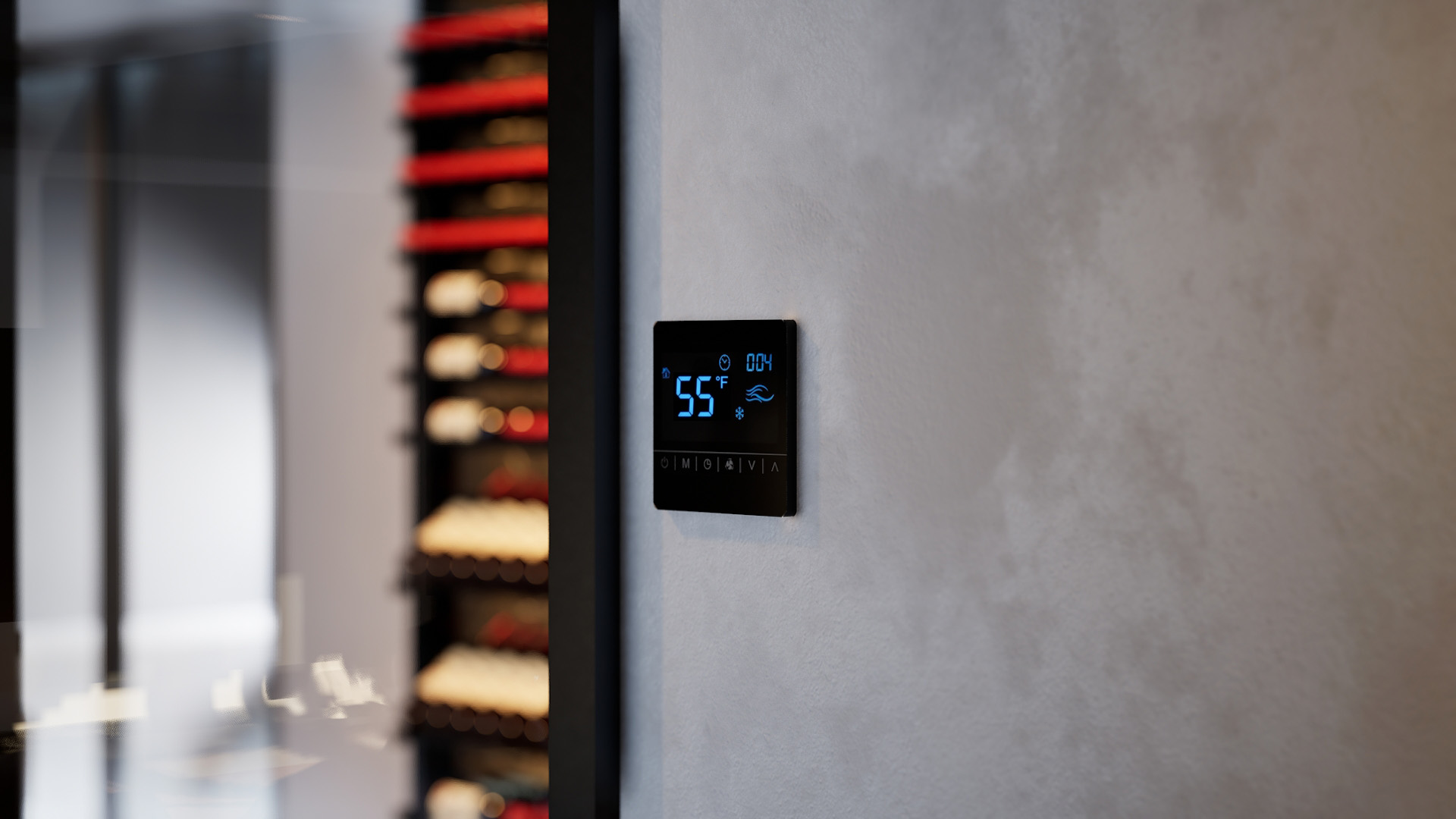
Room behavior
The setpoint depends on the whole enclosure.
How a cooling system keeps temperature stable
A cellar cooling system works by removing heat at a controlled rate, then allowing the room to settle. The return air sensor reads the cellar, the control panel commands the unit to cycle, supply air enters the room, return air goes back to the unit, and the envelope slows outside heat from entering.
In a ducted architecture, the mechanical equipment sits outside the finished cellar. That helps keep noise and service access away from the room while still delivering conditioned air through supply and return ducts. For glass-heavy cellars, larger rooms, and projects where the room is part of the home, that separation matters. Panthaire APEX installation should be completed by a licensed HVAC professional. DIY installation can void the warranty and can leave the condenser, drain, electrical supply, or airflow outside specification.
Setpoint
The target the control panel commands the unit to hold.
Airflow
Supply and return paths that move air evenly.
Envelope
Insulation and sealing that reduce heat gain.
Wine cellar temperature FAQ
Tap a question to expand the answer.
For long-term storage, most mixed wine cellars should be held at 55°F (13°C). The exact setpoint matters less than stability. Wine ages best when it avoids repeated warm and cold swings, especially daily swings caused by sunlight, door openings, or a cooling unit that cycles too aggressively.
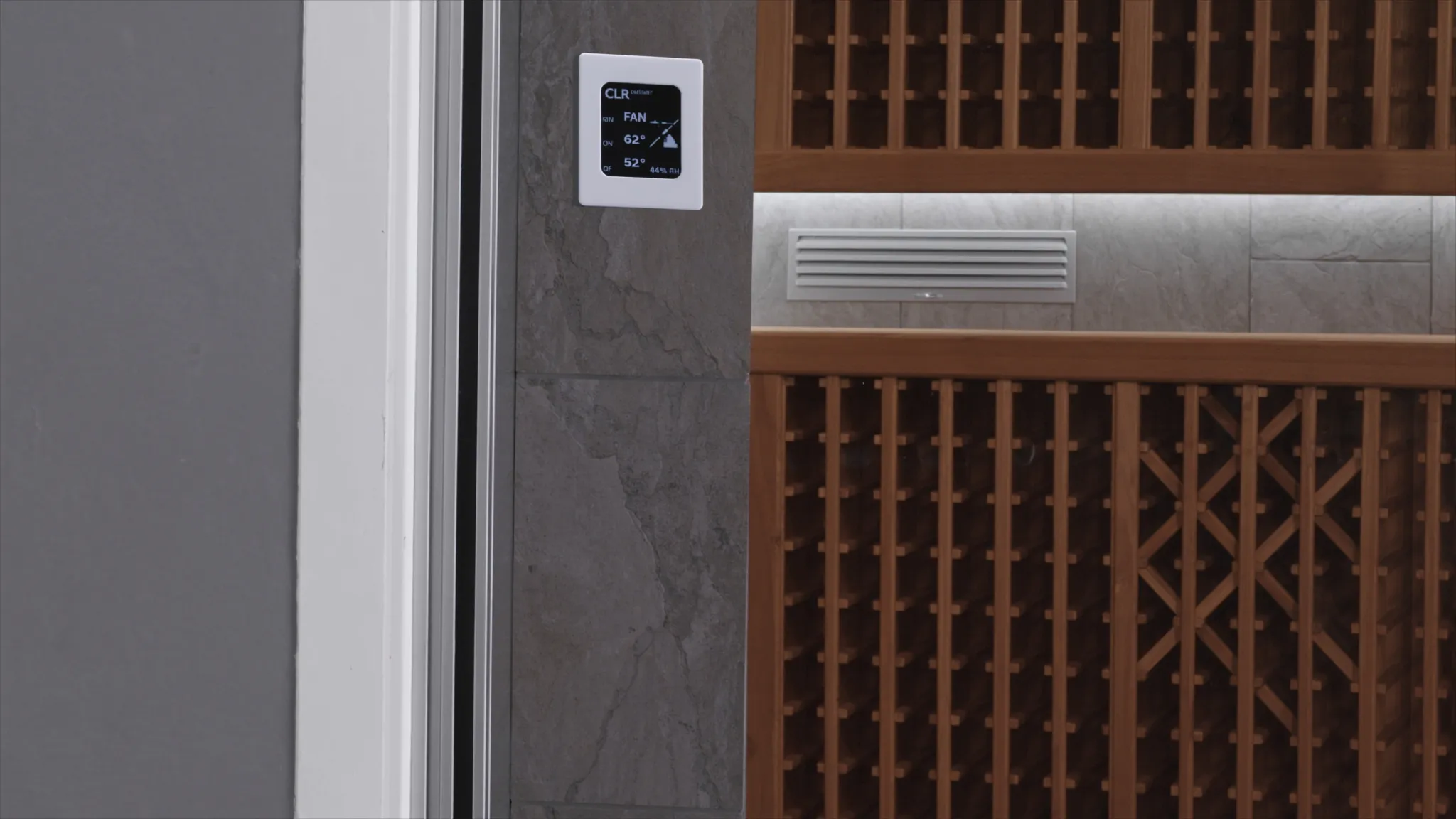
Next step
Size the system, not just the room
If you are planning a new cellar, start with the cooling load. The BTU calculator accounts for volume, glass, door use, and room conditions, then points you toward the right APEX model.