September 12, 2025
Basement, Wine Cabinet, or Full Wine Room?
A plain‑English guide to home wine storage—basement wine storage, temperature‑controlled wine cabinets, and climate‑controlled wine rooms. Learn when each option fits, how to keep a cool, stable climate, cut noise, and avoid foggy glass in showpiece wine walls.
Written and reviewed by
Panthaire HVAC Engineering Team · Licensed HVAC · Wine Cellar Cooling Specialists
The team that engineers APEX is the same team that ships it and answers the phone when installers call.
Last reviewed · July 2, 2026
Reading time
4 min
~855 words
The home storage choice that actually protects your bottles
If you love wine, you’ve probably asked yourself a simple question with a complicated answer: Where should I store it so it stays great? At home, the real‑world choices are basement wine storage, a temperature‑controlled wine cabinet, or a climate‑controlled wine room. Each one can work - for the right situation. This guide explains the differences in plain language and helps you choose without guesswork.
Important note: Panthaire systems deliver a cool, stable climate. They do not add humidity. If your project requires humidity management, pair your build with good room sealing and, where needed, a separate humidifier.
What every bottle needs
- Cooler than typical room temperature and steady from day to night.
- Low light (especially UV) and low vibration so the wine can rest.
- Decent room sealing so the climate you create doesn’t drift.
Hit those basics and you’re already ahead of most “wine racks in a warm room” setups.
Option 1: Basement wine storage
Why people choose it: it’s there, it’s often cooler than the rest of the house, and it costs nothing to try.
How to make a basement work better
- Pick an interior corner away from dryers, furnaces, and windows.
- Keep bottles horizontal if they’re cork‑closed; store in the dark.
- Add a small monitor (thermo/hygro) so you actually know what’s happening.
- If you’re in Toronto, Montréal, New York or Denver, expect seasonal swings—plan around them.
When to move on from the basement
- Heat waves make the space warm for days.
- Winter air dries the house and you notice loose corks or disappointing bottles.
- You want a glass wine wall near living spaces—basements don’t help there.
Basement storage is fine for short‑term keeping and casual collections. For aging, displays, or quiet operation near a kitchen or lounge, you’ll outgrow it.
Option 2: Temperature‑controlled wine cabinet
A wine cabinet is a purpose‑built, temperature‑controlled cabinet that holds a steady, cellar‑cool climate. Think of it as a starter wine room that fits in condos and townhomes.
Why a wine cabinet makes sense
- Delivers a stable, cool climate with minimal fuss.
- Protects from light and vibration better than open shelving.
- Perfect when you have 30–300 bottles and want reliability without remodeling.
Set‑up tips
- Place it where the ambient room isn’t hot; give the cabinet breathing room.
- For apartments and open‑concept condos, look for quiet models and vibration‑damped shelves.
- Choose a size with growth in mind—collections expand faster than you expect.
Know the limits
- A cabinet still radiates a little heat and sound.
- Width and display options are limited; large glass wine walls will outgrow a cabinet quickly.
- If you want a seamless, quiet look beside living areas, a ducted or split wine cooling system inside a small room is the next step.
Option 3: Climate‑controlled wine room
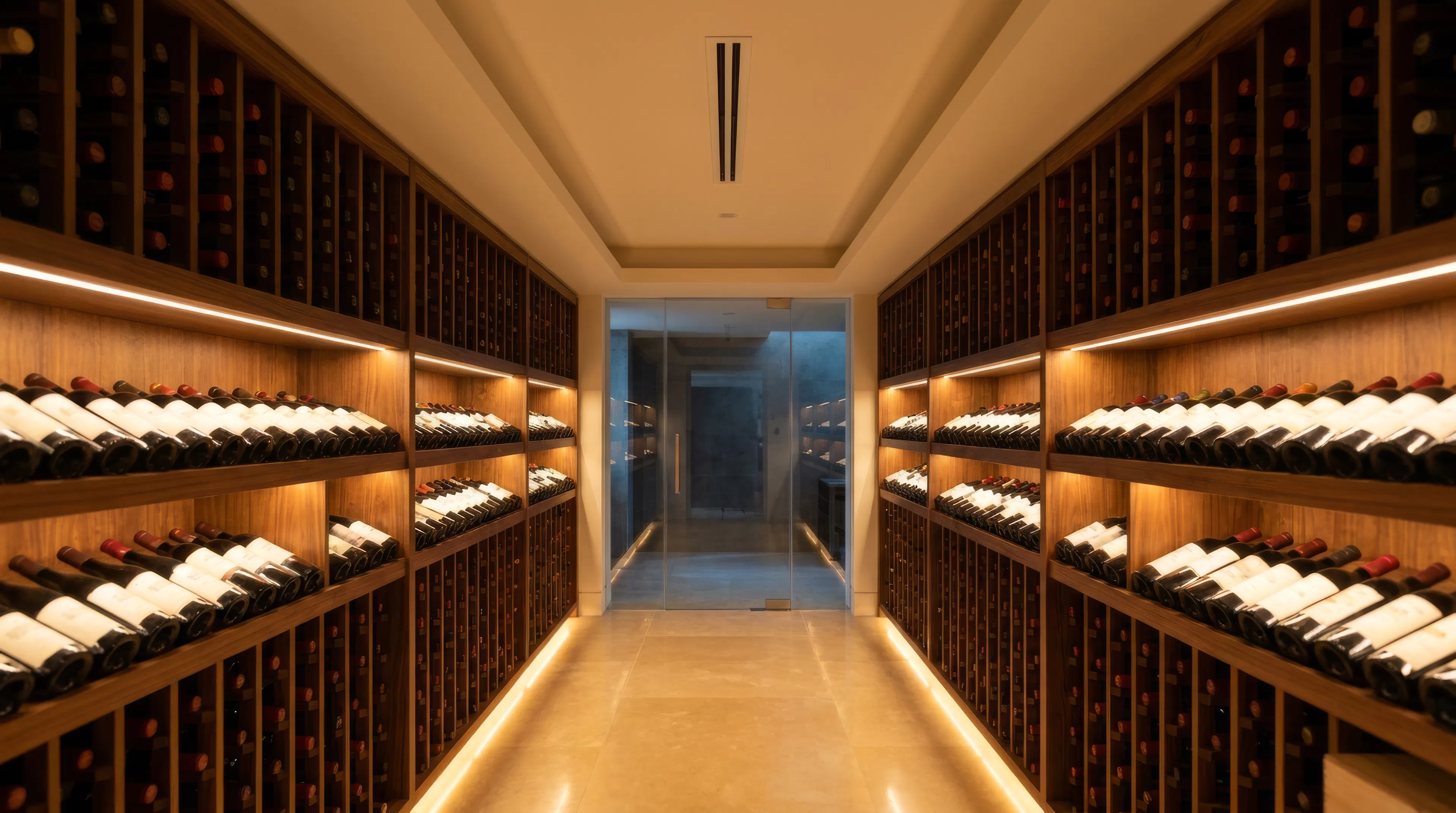
This is a dedicated space—often a closet conversion, under‑stairs nook, or full room—built with insulation and a wine room cooling system (ducted or split) for quiet, steady climate.
Why a wine room delivers
- Purpose‑built for stability—no daily yo‑yo effect.
- Ducted wine cooling moves equipment noise away from the display for near‑silent living spaces.
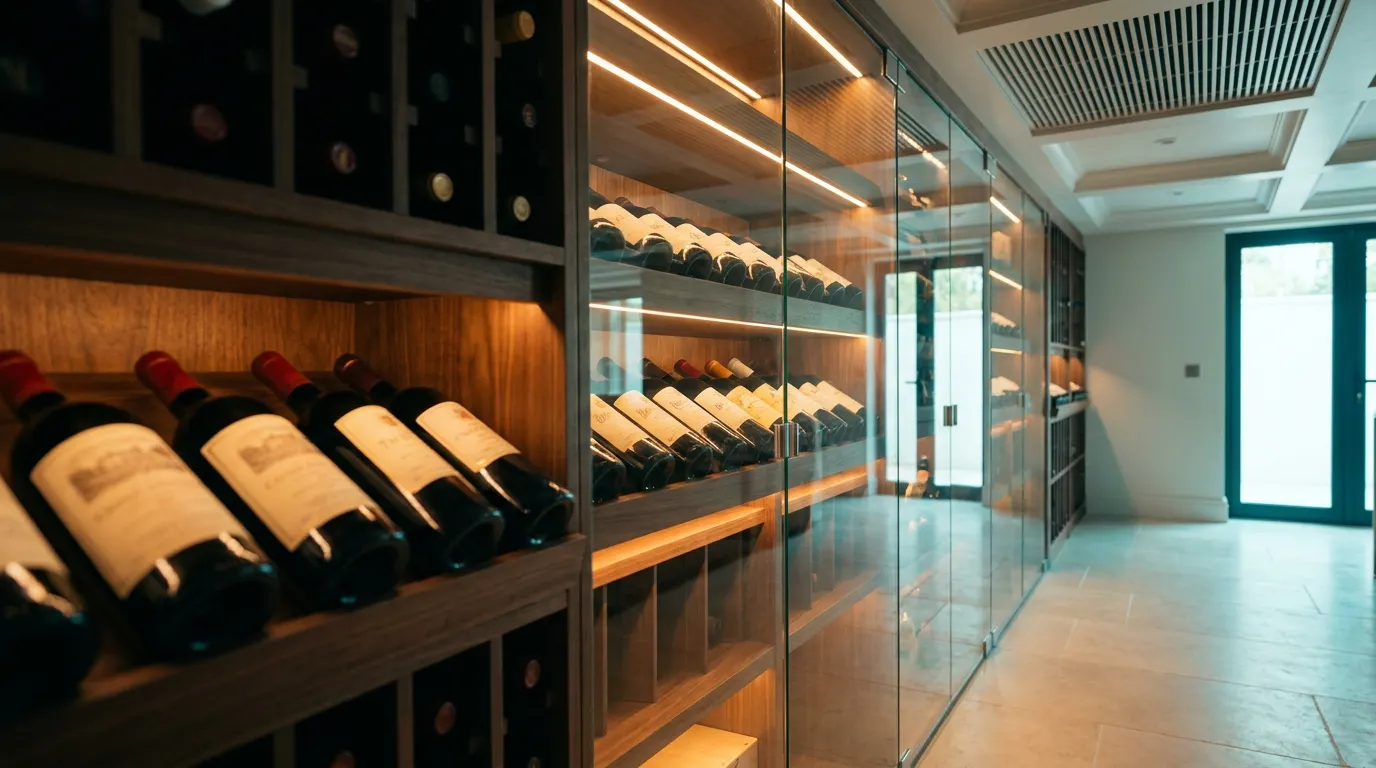
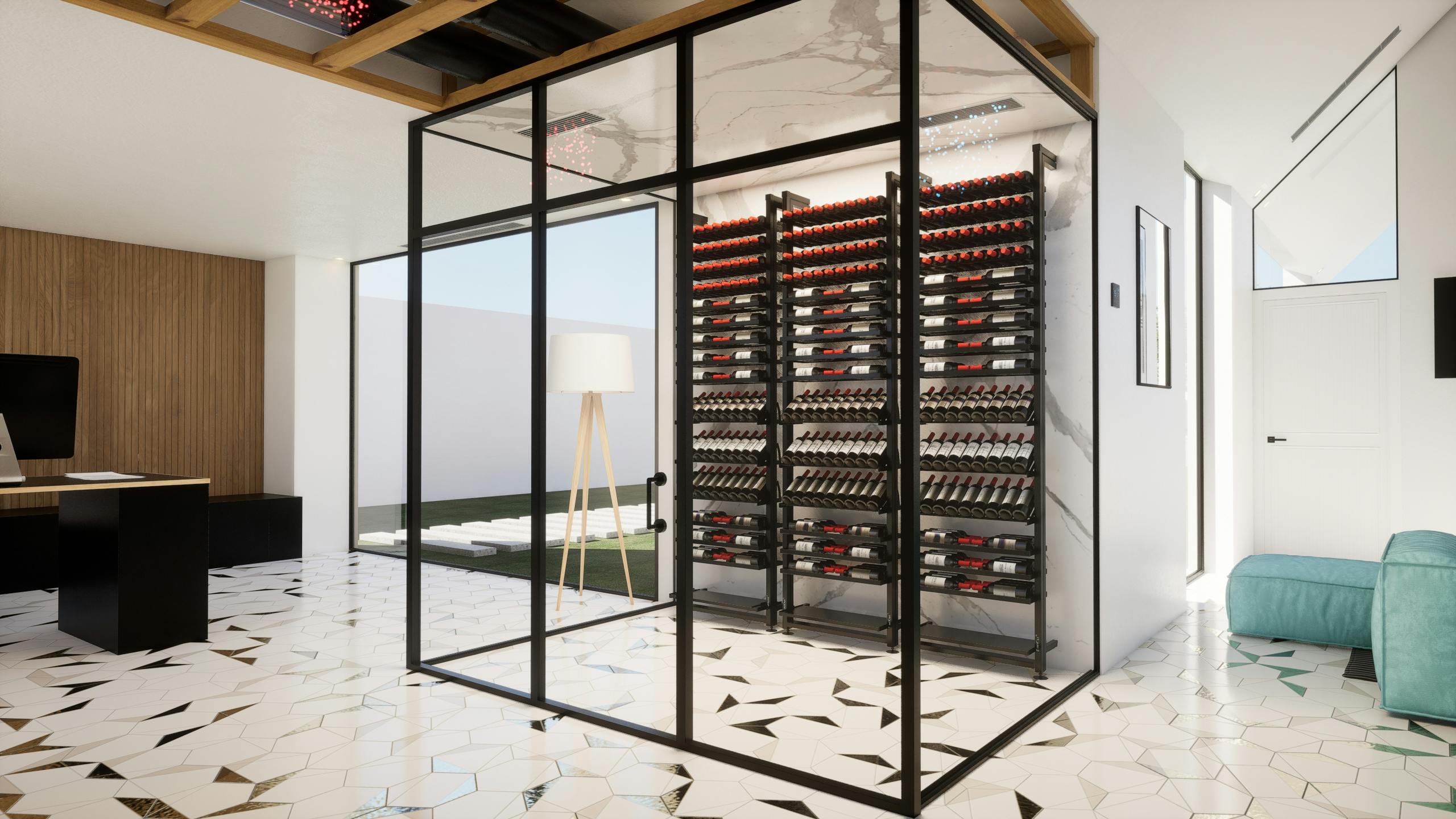
- Plays nicely with glass wine walls when you plan airflow and door seals for anti‑fog clarity.
- Scales from a tidy closet cellar to a serious collection.
Plan the build
- Treat the room like a “mini fridge”: insulation, air sealing, vapor control.
- Pick the right system type (through‑the‑wall, split, or fully ducted) and size it to the room.
- Design for service access, supply/return placement, and LED lighting that won’t heat the display.
- If your insurance or collection goals call for humidity targets, plan a separate humidifier up front.
A simple way to choose
Ask yourself:
- Will I keep bottles longer than a few months?
- Do I care how quiet the space is around the wine?
- Am I building a glass display where clarity matters?
- Does my home see hot summers / dry winters?
- Is my collection growing?
If you said yes to just one, a wine cabinet is often the smartest next step.
If you said yes to several, a climate‑controlled wine room (often ducted for silence) will save you headaches and protect your wine the way you intend to enjoy it.
Quick FAQ
Can I use a kitchen fridge long‑term?
It’s too cold and very dry. Fine for chilling before dinner; not for months of storage.
Do screw‑cap wines still need a controlled climate?
Yes—corks aren’t the only reason. Heat, light and vibration affect all wine.
What about Canadian winters and U.S. heat waves?
Both create extremes. A stable, climate‑controlled wine room evens out those swings.
Does a wine room control humidity?
Your cooling system manages temperature stability. For humidity targets, use room sealing and, if required, a separate humidifier.
Next step
For a full wine room, choosing the right cooling system becomes the deciding factor between an install that lasts and one that disappoints.
If you’re torn between a cabinet and a small room, sketch your space and list your bottle goals. A specialist can recommend ducted vs split options that keep your display quiet and your wine happy—without chasing a specific number on the thermostat.