April 29, 2026
Ducted Wine Cellar Cooling: How It Works and When It's Worth the Upgrade
How a ducted wine cooling unit works, why it's quieter than through-wall systems, and when ducted is the right choice for your cellar.
Written and reviewed by
Panthaire HVAC Engineering Team · Licensed HVAC · Wine Cellar Cooling Specialists
The team that engineers APEX is the same team that ships it and answers the phone when installers call.
Last reviewed · July 2, 2026
Reading time
5 min
~1,077 words
"Ducted" comes up a lot in wine cellar cooling research, usually with a price premium and a vague promise about quieter operation. Worth being specific about what you're actually paying for.
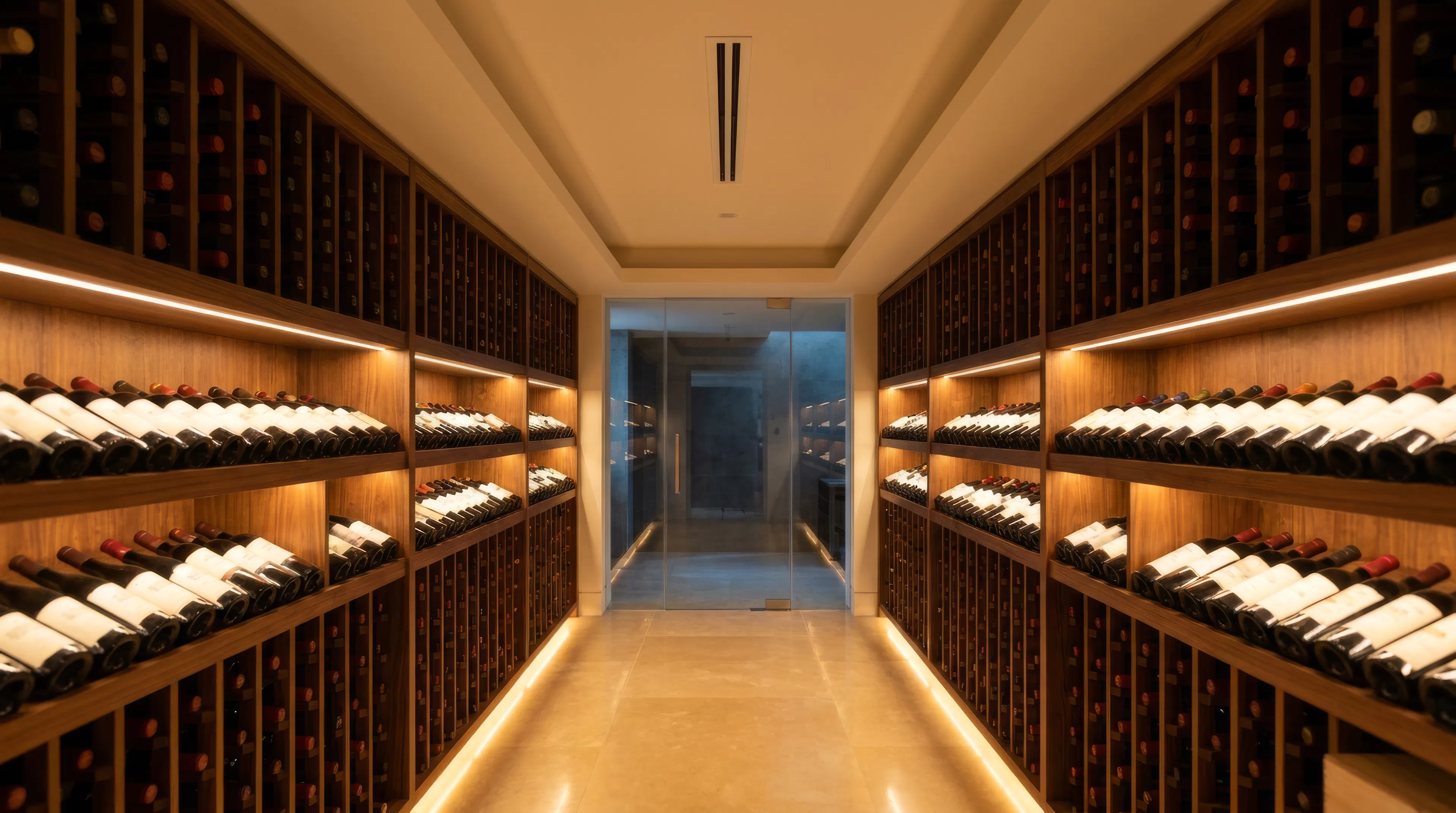
A ducted wine cellar cooling system puts the noisy parts of the unit somewhere else — a mechanical room, an attic, an outdoor enclosure — and runs insulated ducts from there to the cellar. Cellar gets cooled air. The compressor, fans, and condenser sit out of sight and out of earshot. That's the whole pitch. The trade-off is more involved installation; the upside is a cellar that feels like part of the house instead of a refrigerated closet.
What is a ducted wine cellar cooling system?
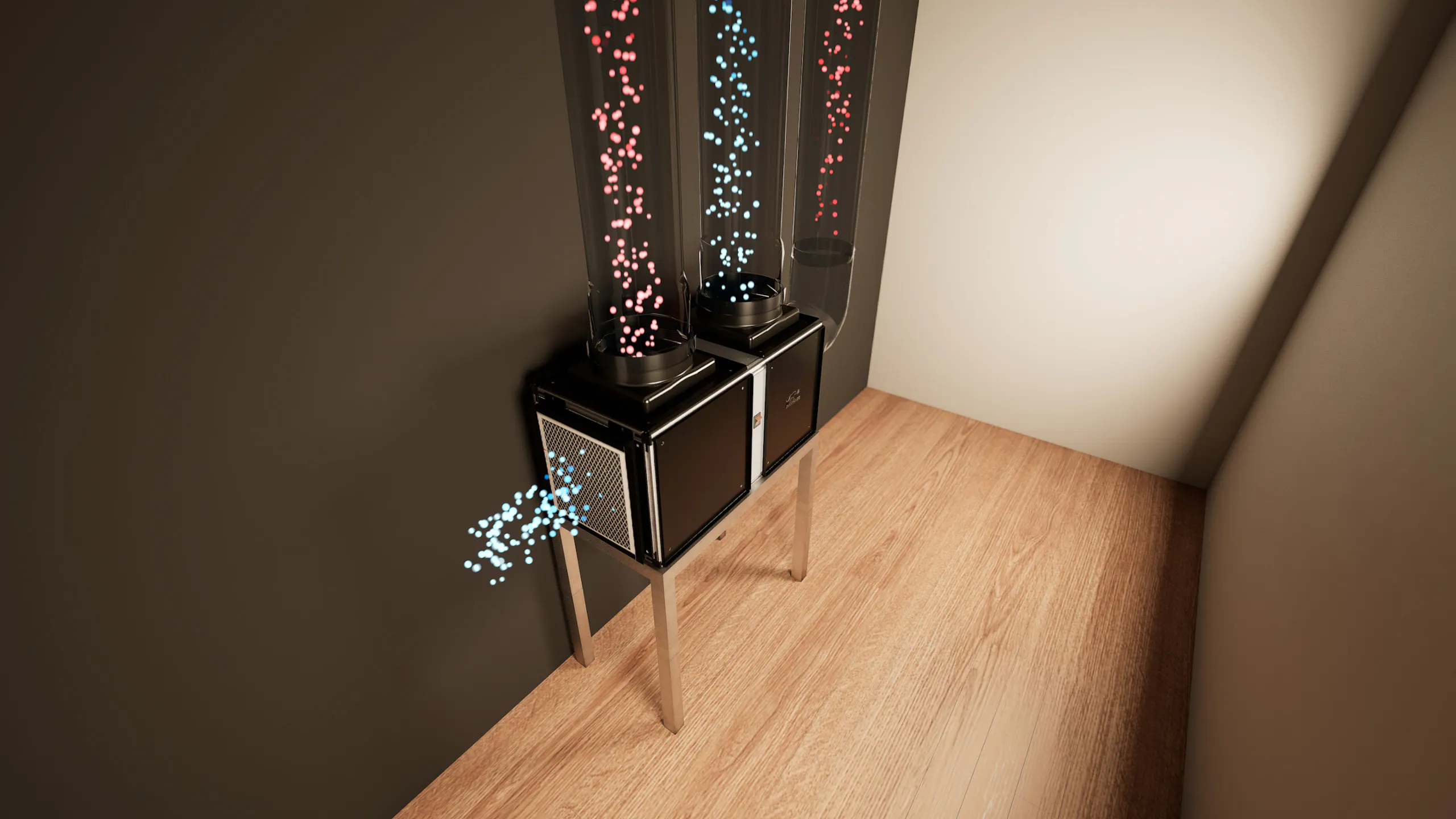
A ducted wine cooling unit is a refrigeration system designed for wine storage where the cooling unit lives outside the cellar. Two insulated ducts connect them: one supply, one return. That's it.
This is structurally different from through-the-wall and self-contained units, which sit inside (or partially inside) the cellar.
The "ducted" label is borrowed from residential HVAC. Same idea: hide the equipment somewhere out of sight, run treated air through ducts.
How a ducted wine cooling unit works
The cycle has five steps and they all happen in the unit, not in the cellar:
- A return-side fan pulls warm cellar air to the cooling unit. By the time it arrives, the air is at whatever your cellar's ambient is — call it 58°F.
- The refrigerant loop cools that air. A sealed loop (R-290 propane in modern systems, R-134a in older ones) and a small compressor pull heat out. Air leaves the unit a few degrees below your setpoint.
- The cooled air goes back to the cellar via the supply duct. It mixes with the cellar's existing air and the room average drops back toward 55°F.
- The unit dumps heat into the room it's mounted in, not the cellar. Mechanical room, attic, garage, outdoor enclosure — wherever the unit lives is where the warm exhaust goes.
- A thermostat in the cellar cycles the unit on and off. Standard digital thermostat, wall-mounted, monitors the cellar.
Ductwork is usually 6"–8" insulated round duct, the same kind you'd see in a residential HVAC install. The longest run from unit to cellar is around 25 feet before you start losing meaningful capacity to friction and heat gain through the duct walls.
Ducted vs through-wall vs self-contained
Three real options. Ducted is the most expensive of the three, so the question is when the upgrade actually pays off.
Through-the-wall units mount in a cutout through the cellar wall. Cold side faces in, hot side vents into an adjacent room. Cheap to install, simple to spec, and audible whenever the compressor runs. Doesn't work if your cellar doesn't share a wall with somewhere you can dump heat.
Self-contained units sit entirely inside the cellar with a single exhaust line. Common in retrofits. The compressor is in the room with you, and even the quietest models hum.
Ducted units put the compressor wherever you have space within ~25 feet of the cellar. The cellar itself contains nothing but the supply and return grilles, usually concealed in a ceiling soffit. You pay 30–50% more for the unit, plus more on install. For a finished, lived-in cellar, it's the only option that doesn't compromise the room.
Why ducted wine cellar cooling is quieter
The compressor and condenser fan together are the bulk of any cooling unit's noise. In a through-wall or self-contained unit, those components are inside (or right against) the cellar. You hear them when the unit cycles — comparable to a refrigerator humming in the next room.
In a ducted setup, those components are physically somewhere else. What you hear inside the cellar is the supply air entering through the grille — the gentle whoosh of a forced-air heating vent. Whether that matters depends on how you use the cellar. For a storage room nobody hangs out in, the noise of a through-wall unit is fine. For a cellar that doubles as a tasting space or a bar — anywhere people are spending time, looking around, talking — the difference is the whole reason ducted systems exist.
When ducted makes sense
Ducted is the right call when:
- The cellar is part of a finished, lived-in space
- You want the cellar visually free of mechanical equipment
- There's a mechanical room, attic, or basement utility space within ~25 feet
- The cellar is medium-to-large
- You're planning to live with the system for ten or more years
Skip ducted when:
- The cellar is in an unfinished basement and nobody hangs out in it
- There's nowhere usable to mount the unit within 25 feet
- You're cooling a small cabinet or closet — a through-wall unit is sized correctly for it
- Budget is the constraint and you can live with the noise
Installation requirements
A licensed HVAC contractor can install a ducted system in a single visit if the building's ready. They need:
- A dedicated 115V/60Hz residential circuit
- A condensate drain line, gravity-fed if possible (small condensate pump if not)
- A duct run no longer than 25 feet between cooling unit and cellar, in 6"–8" insulated round duct
- Two openings cut into the cellar wall or ceiling for grilles
- A thermostat location inside the cellar
Panthaire APEX systems ship pre-charged, so there's no field refrigerant work — keeps installation closer to a single visit than a multi-day project.
Choosing the right system
Sizing is where most people go wrong. Capacity depends on cellar volume plus several modifiers: glass walls or doors, lighting load, the ambient temperature outside the cellar, insulation R-value, and any thermal mass inside (stone, large wine inventories).
The Panthaire APEX series covers the typical residential range:
- APEX 3500 (3,353 BTU/hr) — up to ~900 cu ft (≈ 25 m³)
- APEX 5000 (4,462 BTU/hr) — up to ~1,200 cu ft (≈ 34 m³)
- APEX 7000 (6,346 BTU/hr) — up to ~2,000 cu ft (≈ 57 m³)
These assume well-insulated cellars at typical US ambient conditions. Glass-front cellars, partially insulated rooms, or cellars in hot climates often need the next size up.
Ready to spec a ducted cooling system?
If your project fits the use case for ducted cooling — a finished cellar where noise and aesthetics matter, with a usable mechanical space within 25 feet — the next step is to size to your cellar's actual cooling load.
Compare the APEX Series or read our installation guide for the full requirements list.